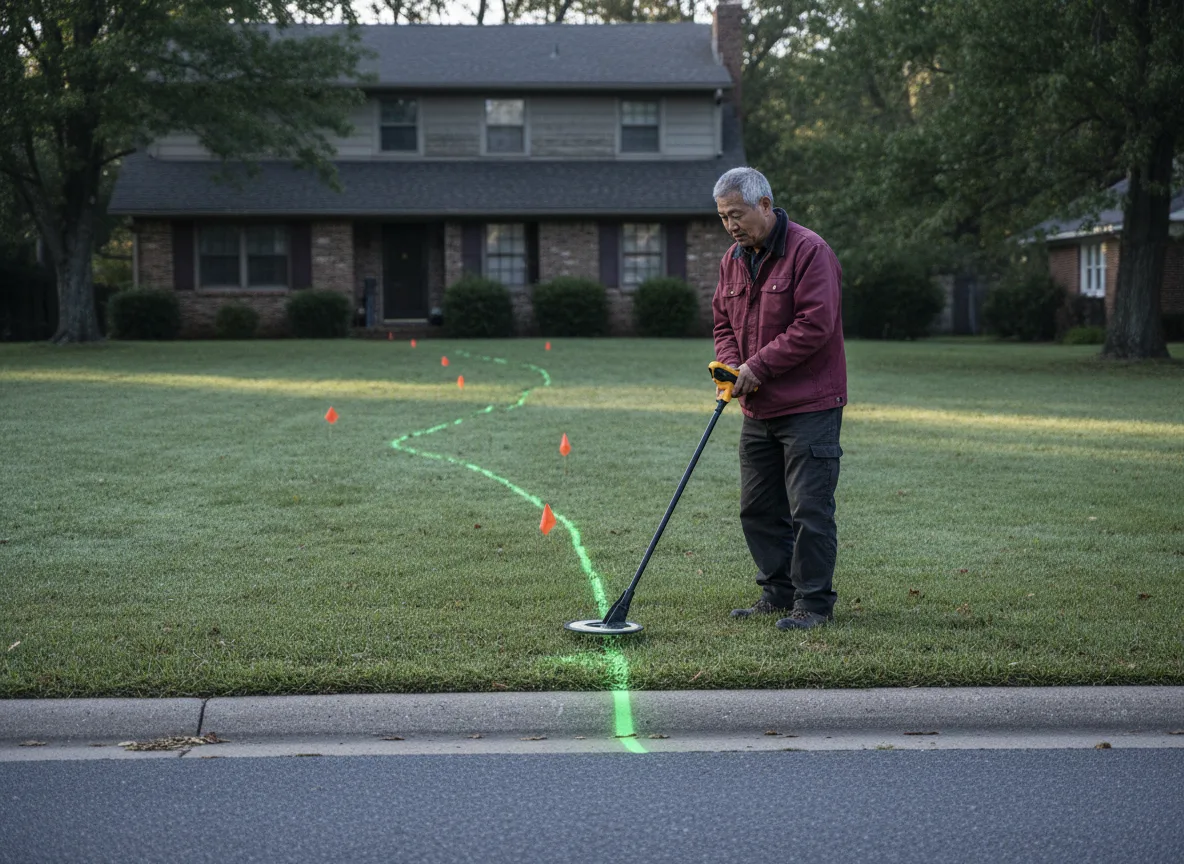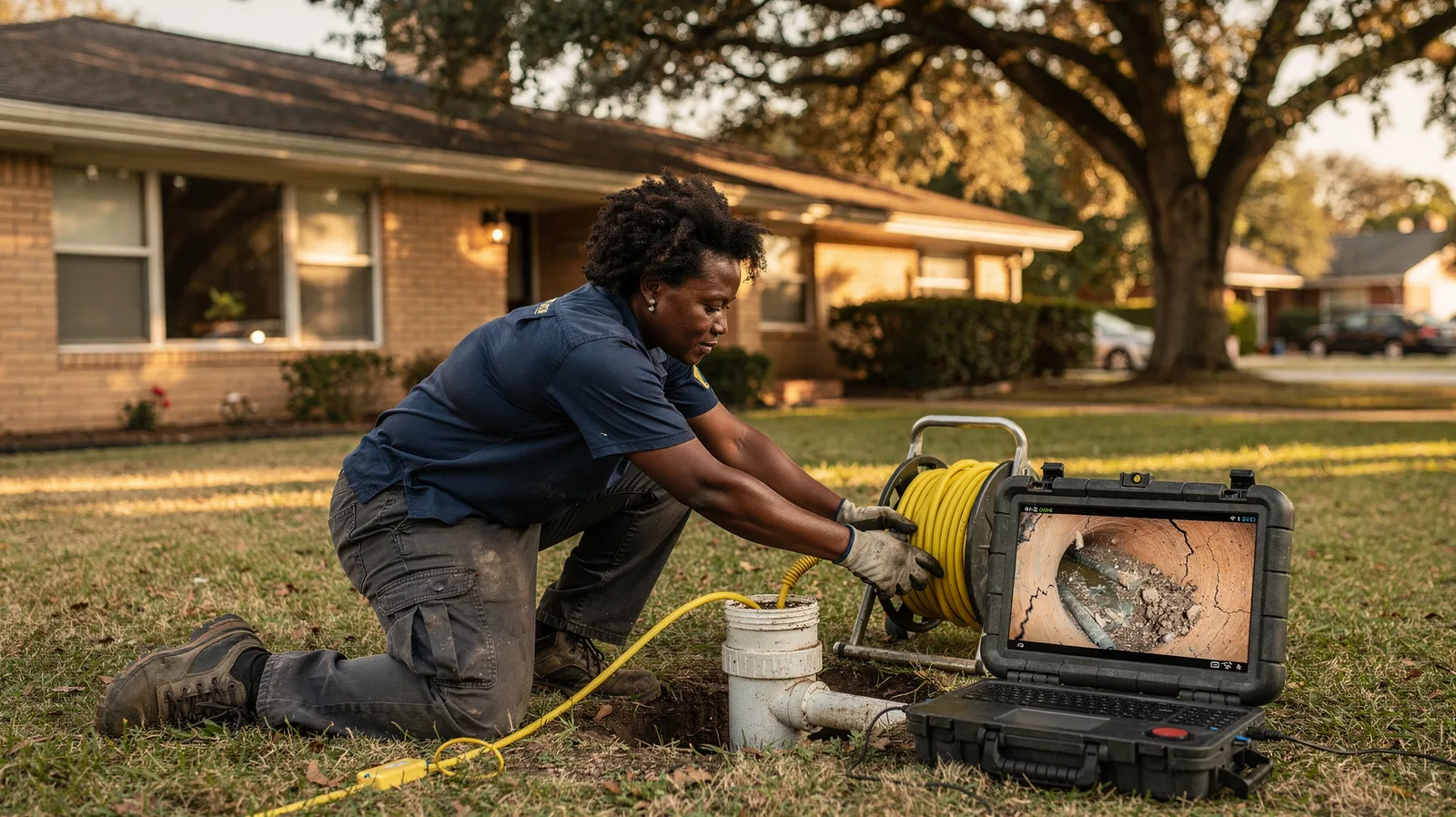
Locating answers two questions before any digging starts: where exactly does the sewer run, and how deep is it at each point? Old plats and memory are often wrong, especially on lots where additions, patios or driveways went in after the house was built.
How a camera locate works
Most sewer cameras carry a small transmitter, called a sonde, just behind the camera head. As the camera moves through the pipe, the tech walks above it with a receiver tuned to the sonde's frequency. The receiver finds the strongest signal directly over the transmitter and gives a depth reading. Marks go down on the ground with paint or flags at each defect, at bends and at intervals along the line, so you end up with a map of the route.
When you need it
- Before a spot repair, so the excavation lands on the broken section instead of beside it
- Before a fence, deck, addition or tree planting near the line
- When a cleanout is buried and nobody knows where it is
- When planning a trenchless job that needs entry and exit pits
Limits worth knowing
The signal can weaken under deep fill, reinforced slabs or near metal utilities, so depth readings are estimates. A sewer locate also does not mark gas, power or water lines. Call 811 before any digging in Java, VA so the utility companies mark their own lines; that is a separate service run by the utilities.