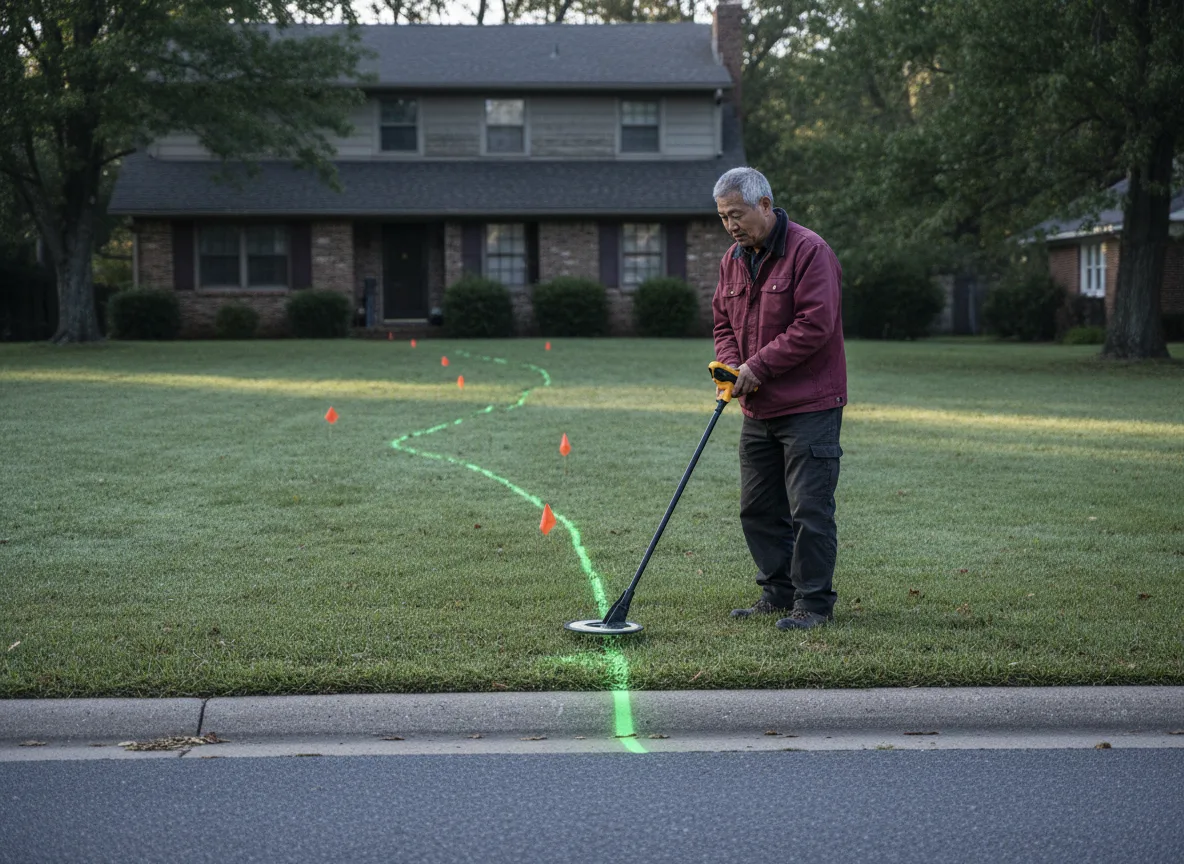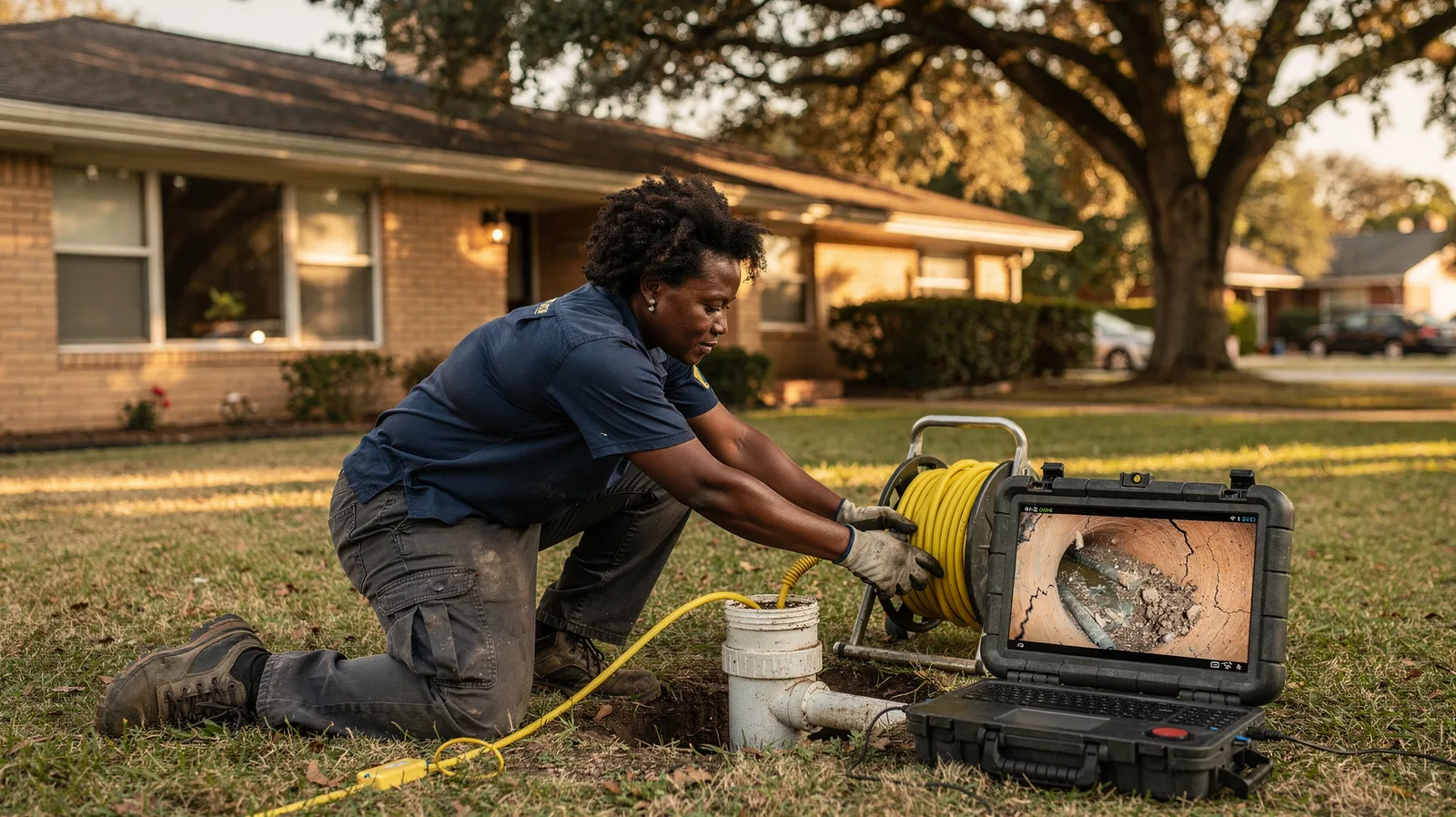
A sewer camera inspection puts a waterproof camera on a flexible push rod and sends it down the main drain line. The head carries its own lights, and a counter on the reel records how many feet of cable are out, so every crack or root shows up with a distance attached. Most homes in Java, VA have one main line leaving the house, and that is the line the camera follows.
What the footage shows
- Pipe material and where it changes, such as cast iron inside the house switching to clay or PVC in the yard
- Standing water that marks a belly, or low spot, in the line
- Offset joints where one section has dropped or shifted against the next
- Root strands or root masses coming through joints
- Cracks, holes, crushed sections and heavy scale
Access and length of the run
The tech enters through a cleanout when there is one. Without a cleanout, a toilet can be pulled and the camera sent in at the flange, or the run can start from a roof vent. Push cameras typically reach 100 to 200 feet, which covers the distance to the public main on most residential lots.
After the run
You can watch the monitor during the inspection and ask about anything on screen. The recording is yours to keep. It gives any contractor you call something concrete to price against, and it gives you a baseline to compare with if the line acts up later.